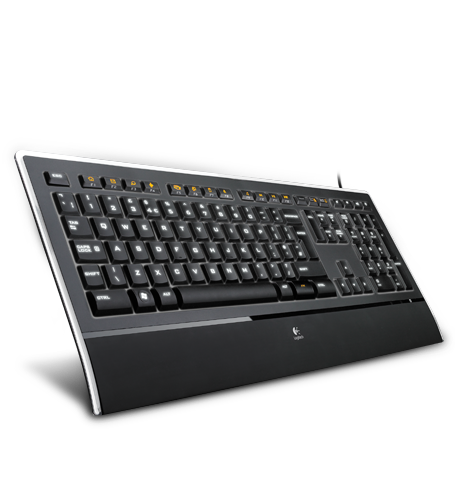
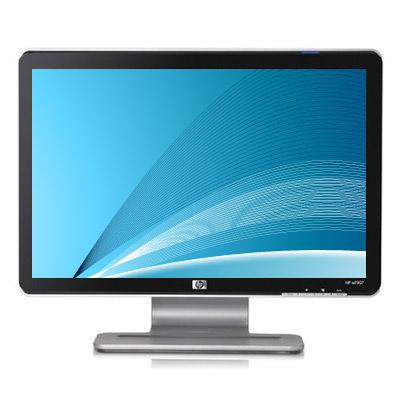
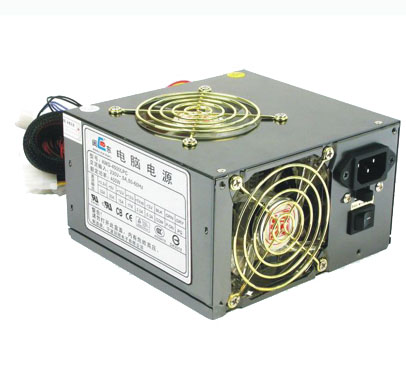
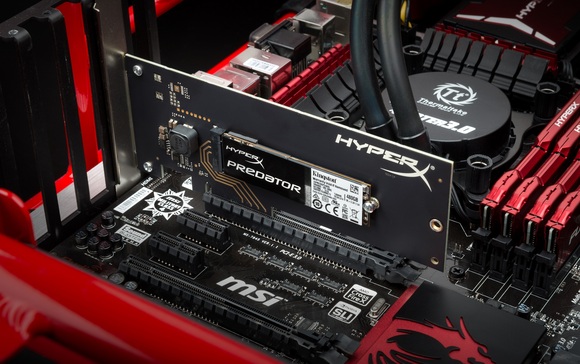
- Software / OS Installation - Accessories
- I.T Advice
Stan Computer Solutions, aims at helping clients maximize return on IT investments by supporting the full life-cycle of your key IT initiatives, from assessment and design to deployment and on-going management.
Also focusing on giving your basic school better and affordable computer lab set-up to enhance their knowledge on computer and IT generally.
We can help your organization and employees collaborate more efficiently with a Unified communications solution. Our experienced solution architects and engineers work with you and our industry-leading partners to give you solutions and services across the entire IT life-cycle. Free up your team to focus on what really matters: better business outcomes.
Information is one of your biggest business assets. You need an information technology partner who understands that.
You
need someone who believes information technology systems are more than
just a bundle of wires and blinking lights: they’re the heart and soul
of your business. That doesn’t mean they can’t be a hassle, though. It
can be daunting and frustrating to worry about whether your systems are
secure, efficient, and effective when you’re busy attending to all the
other needs of your small or mid-sized organization.
That’s
where we come in. While you’re busy running your business, we take care
of tech support and so much more -- offering strategic advice,
technological expertise, and the kind of insight and partnership you can
only get from a trusted advisory.
Whatever
your business, we help you achieve your business goals by making
technology work for you. We provide IT consulting and computer support
services so you no longer have to worry about IT headaches.
A BRIEF HISTORY OF COMPUTERS
We owe the invention of computers to the fact that nobody likes to do math,
not even mathematicians. Don't raise your eyebrows like that - it's true.
Mathematicians don't like to do math. Oh, they like to think about math
and discuss it with other math weenies, but not a one of them likes to sit
down and do months of endless calculations with pencil and paper. As a result
of mankind's general loathing for long columns of figures, mathematicians
and inventors had been trying to build mechanical calculators since the
Babylonians invented the abacus 5000 years ago.
A complete history of computing would include a multitude
of diverse devices such as the ancient Chinese abacus, the
Jacquard loom (1805) and Charles Babbage's ``analytical
engine'' (1834). It would also include discussion of
mechanical,
analog and digital computing architectures.
As late as the
1960s, mechanical devices, such as the Merchant calculator,
still found widespread application in science and
engineering. During the early days of electronic computing
devices,
there was much discussion about the relative merits of
analog vs. digital computers. In fact, as late as the 1960s,
analog computers were routinely used to solve systems of
finite difference equations arising in oil reservoir modeling.
In the end, digital computing devices proved to have the
power, economics and capability necessary to deal with
large scale computations.
Digital computers now dominate the computing world in all areas ranging from the hand calculator to the supercomputer and are pervasive throughout society. Therefore, this brief sketch of the development of scientific computing is limited to the area of digital, electronic computers.
The evolution of digital computing is often divided into generations. Each generation is characterized by dramatic improvements over the previous generation in the technology used to build computers, the internal organization of computer systems, and programming languages. Although not usually associated with computer generations, there has been a steady improvement in algorithms, including algorithms used in computational science. The following history has been organized using these widely recognized generations as mileposts.